Your posture, your cuff and even a cup of coffee can change the number. Here is how to take home readings your doctor can trust, step by step.
A home blood pressure monitor can tell you a lot. It can also mislead you. Sit down right after a coffee, rest your arm in your lap, chat on the phone while the cuff inflates, and the number on the screen may be well above your real blood pressure. Do it the right way, and the readings you collect at your kitchen table in Boynton Beach can be some of the most useful information your doctor ever sees.
In brief
- How you sit, rest and position your arm can change a reading as much as the monitor itself.
- Take two readings a minute apart, morning and evening, and write them all down.
- Very high readings with chest pain, shortness of breath, weakness or trouble speaking mean calling 911.
Why home readings matter
A single reading in a doctor’s office is a snapshot. Blood pressure moves up and down all day with stress, sleep, activity, caffeine and even a full bladder. Some people run higher in the exam room than they do at home, often called “white coat” hypertension. Others are the reverse: normal at the office, higher in everyday life, sometimes called “masked” hypertension.
Readings taken at home over days and weeks fill in that picture. They help your doctor see whether your numbers are truly high, whether a medication is working, and whether a change in routine is making a difference. That only works if the readings are taken consistently and correctly.
Choosing a monitor that gives you good numbers
You don’t need anything fancy, but a few details make a big difference:
- Upper-arm cuff. Monitors with a cuff that wraps around the upper arm are generally recommended over wrist and finger devices, which are more sensitive to position.
- The right cuff size. A cuff that is too small can read falsely high; one that is too big can read low. Measure around the middle of your upper arm and match it to the size range printed on the cuff.
- A validated device. Look for a monitor that has been clinically validated for accuracy, and ask your doctor if you’re unsure.
- A check against the office. Bring your monitor to your next visit. Comparing it with a reading taken in the office is the simplest way to know you can trust it.
If you already monitor your numbers because of high blood pressure or cholesterol, our page on blood pressure and cholesterol care explains how we manage both over the long term.
Want a doctor who actually looks at your log?
Wave members can call, text or video their own doctor 24/7 and share home readings directly. Come see the office in Boynton Beach on a free, no-obligation tour.
How to check your blood pressure at home, step by step
Before you start
- Wait 30 minutes after caffeine, exercise or smoking. All three can push your numbers up for a while.
- Use the bathroom first. A full bladder can raise a reading.
- Sit quietly for 5 minutes. No phone, no TV news, no conversation. Just rest.
Get the position right
- Sit in a chair with your back supported, not on a sofa or the edge of the bed.
- Feet flat on the floor, legs uncrossed.
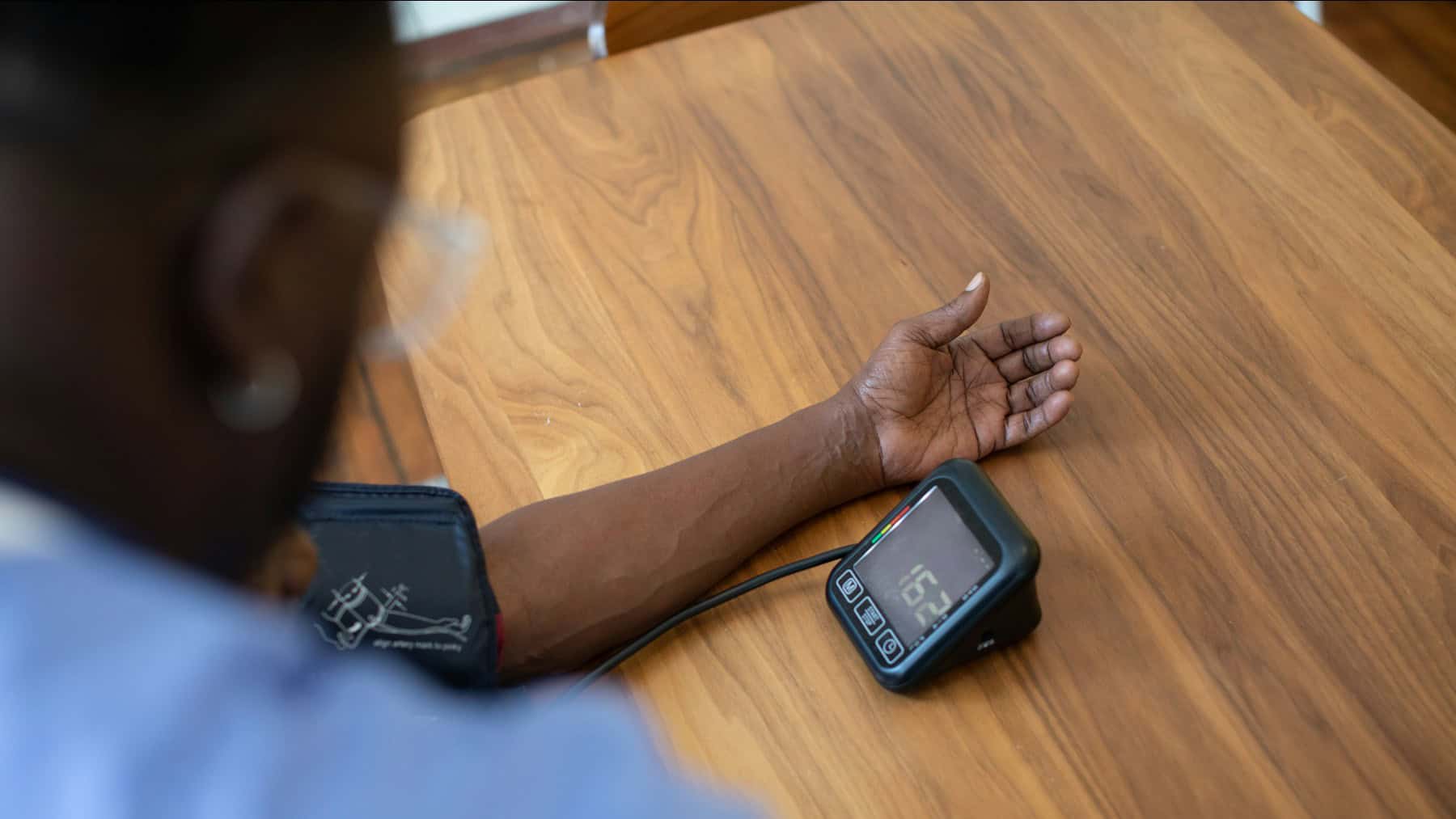
- Rest your arm on a table so the cuff sits at about the level of your heart. A dangling arm or one resting in your lap can change the result.
- Put the cuff on bare skin, not over a sleeve. The bottom edge should sit just above the bend of your elbow.
Take the reading
- Stay still and quiet while the cuff inflates and deflates. Talking can nudge the number up.
- Take at least two readings, about a minute apart, and record both.
- Repeat at the same times each day, for example in the morning before medications and breakfast, and again in the evening.
Keep a log your doctor can use
A good log is simple: the date, the time, both readings, and a short note about anything unusual, such as poor sleep, pain, a missed dose or a stressful day. Many monitors store readings, but writing them down or keeping them in a phone note makes them easy to share. Write down every reading, not just the good ones.
Here’s the difference that sharing can make.
The usual way: you notice a week of higher numbers, send a portal message, and wait several days for a reply, or you hold onto the log until a routine appointment months away.
With your own doctor: you text a photo of your log to the doctor who knows your history. If something needs a closer look, a same or next day visit is the norm, with labs and an EKG in the same building.
What the numbers mean
Blood pressure is written as two numbers. The top number (systolic) is the pressure when your heart beats; the bottom number (diastolic) is the pressure between beats. Generally, a reading under 120/80 is considered normal. Above that, the right target and the right next step depend on your age, your health and your other risks, which is why your doctor should interpret your log rather than a chart on the internet.
One high reading on its own is rarely the whole story. Patterns over days and weeks are what matter.
When a reading is an emergency
If a reading is above 180 on top or above 120 on the bottom, wait a few minutes and check again. If it is still that high and you have symptoms such as chest pain, shortness of breath, back pain, numbness or weakness, a change in vision, or difficulty speaking, call 911. Don’t drive yourself and don’t wait to see if it passes. If the reading stays that high without symptoms, contact your doctor right away.
Common mistakes that throw readings off
- Measuring right after walking in from the parking lot or climbing stairs
- Wrapping the cuff over a shirt sleeve, or rolling a tight sleeve up so it squeezes the arm
- Using a cuff that’s the wrong size
- Letting the arm hang or rest below heart level
- Taking one reading and stopping, or only writing down the lowest number
- Checking only when you feel unwell, which skews the picture
When your readings need a closer look
If your home numbers are consistently higher than your doctor expects, or you’re having dizziness, headaches or palpitations, it’s worth a visit rather than more guessing.
The usual way: a referral to a heart specialist, a wait for the first opening, then separate trips for tests at different locations, with results passed between offices.
With your own doctor: at Wave, cardiology is on location, including stress tests, and specialists are normally seen the same day, with your records sent ahead and the results reviewed with you afterward. Prescriptions go to your nearest pharmacy and your medication list stays up to date in one place.
For patients across Palm Beach County, from Delray Beach to Boca Raton, that means home readings turn into a plan quickly instead of sitting in a notebook. If you’re getting ready for a check-up, our guide on how to prepare for your annual physical explains what to bring, including your blood pressure log.
Bring your numbers. We’ll make sense of them.
Same or next day visits, unhurried appointments, and testing under one roof at 8190 Jog Rd in Boynton Beach. See our membership plans or book a free tour and consultation.
This article is general information, not medical advice for your situation. For a medical emergency, call 911.
Read next