That stabbing pain with your first steps out of bed has a name. Here is what causes plantar fasciitis, what helps it heal, and when heel pain needs a closer look.
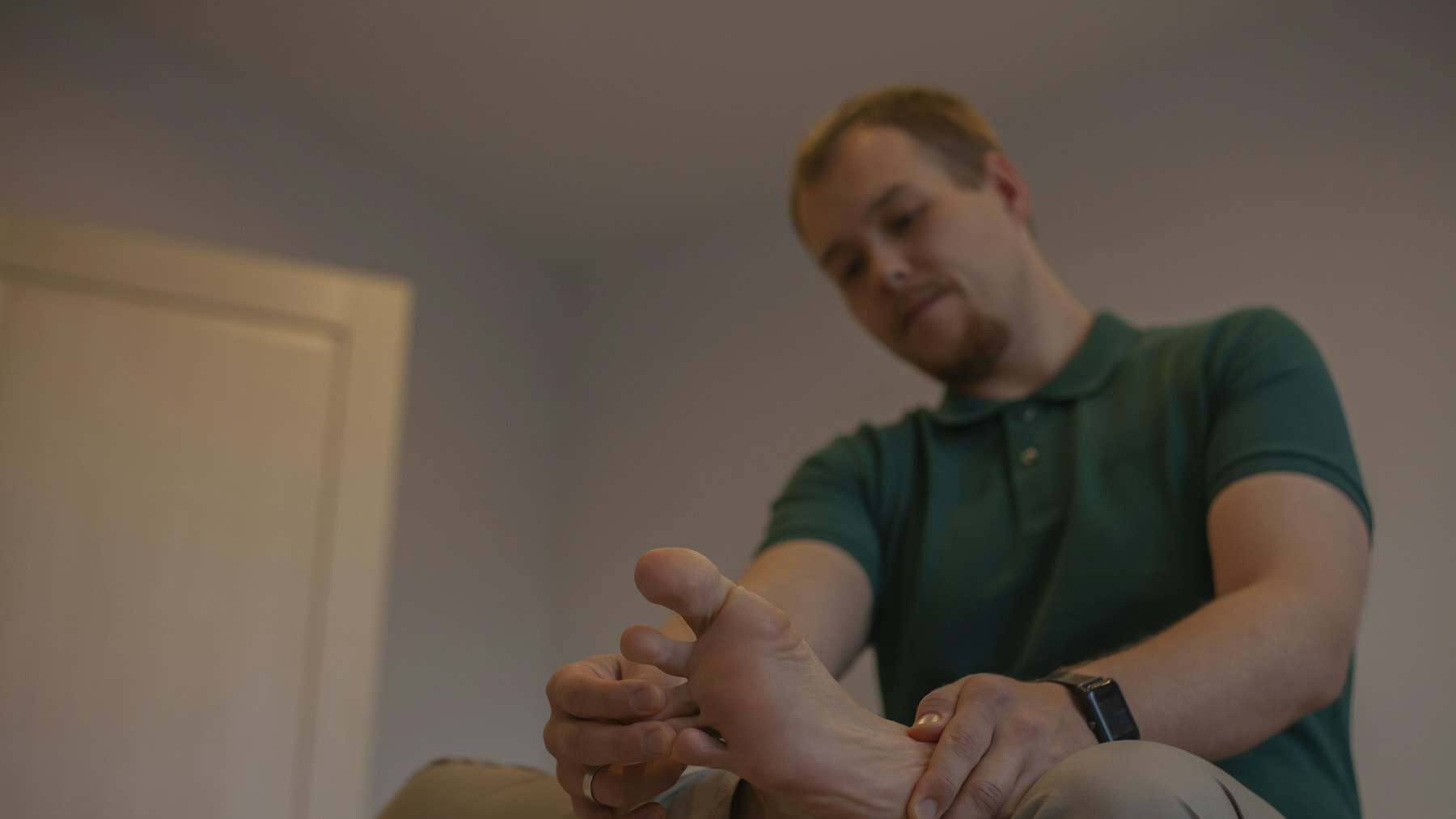
It usually announces itself first thing in the morning. You swing your legs out of bed, put your weight down, and a sharp, stabbing pain shoots through the bottom of your heel. A few minutes of hobbling to the kitchen and it eases up, so you put it out of your mind. Then it comes back after you sit through a long lunch, or at the end of a day on your feet. If that pattern sounds familiar, there is a good chance you are dealing with plantar fasciitis, one of the most common causes of heel pain in adults.
In brief
- Plantar fasciitis is irritation of the thick band of tissue under your foot, and its hallmark is heel pain with your first steps of the day.
- Most people get better with simple, steady care such as stretching, supportive shoes and easing off the activities that aggravate it.
- Heel pain with numbness, swelling, warmth, or pain after an injury deserves a prompt exam, because other problems can look similar.
What plantar fasciitis actually is
The plantar fascia is a thick band of tissue that runs along the bottom of your foot, from your heel bone to your toes. It supports your arch and absorbs the shock of every step.
When that band is put under more strain than it can handle, it becomes irritated where it attaches to the heel. It is now understood mostly as wear and overload of the tissue, which is why it often builds slowly.
Why the first steps hurt the most
While you sleep or sit, your foot relaxes and the plantar fascia tightens up. The moment you stand, that band is suddenly stretched under your full body weight. That is why the pain is classically worst with the first steps in the morning or after a long stretch of sitting, then loosens up as you move, and can return after standing or walking for hours.
Common symptoms
- Sharp or stabbing pain on the bottom of the heel, usually in one foot
- Pain that is worst with the first steps after waking or after sitting
- Pain that eases with gentle walking but flares after long periods of standing
- Tenderness when you press on the underside of the heel
Who tends to get it
Plantar fasciitis is most common in middle age, though it can happen at any adult age. Things that raise the odds include:
- Time on your feet. Teachers, nurses, retail and restaurant workers, and anyone who stands on hard floors all day.
- A jump in activity. Starting a walking program, adding miles, or taking up a court sport like tennis or pickleball.
- Foot shape and tight calves. Flat feet, high arches, or a tight calf and Achilles tendon put extra pull on the fascia.
- Footwear. Thin flip-flops, worn-out sneakers and going barefoot on hard surfaces offer little arch support. In South Florida, where sandals are practically a year-round uniform, this is a common contributor.
- Extra body weight, which adds load with every step.
Long walks on soft sand at the beach in Delray Beach or Boca Raton can also be surprisingly hard on the feet and calves if you are not used to it.
Heel pain slowing you down?
Come see us in Boynton Beach for a free tour and consultation. Members get same or next day visits with their own doctor, plus X-ray, ultrasound and physical therapy in the same building.
What else could be causing heel pain
Not all heel pain is plantar fasciitis, and the details matter. A doctor will usually want to rule out:
- Achilles tendon problems, which cause pain at the back of the heel rather than underneath
- A stress fracture of the heel bone, more likely after a sudden increase in walking or running
- A pinched or irritated nerve, which tends to cause burning, tingling or numbness
- Thinning of the heel’s fat pad, which can cause a deep, bruise-like ache
- Arthritis or other joint conditions that affect the foot
You may also hear about heel spurs. These small bony growths often show up on X-rays, but many people have them with no pain, and they are usually not the cause.
How it is diagnosed
Plantar fasciitis is usually diagnosed with a conversation and a hands-on exam: when the pain started, when it is worst, what has changed, and how your foot and calf respond to pressure and stretching.
Imaging is not always needed. When the picture is unclear or the pain is not improving, an X-ray can help rule out a fracture or arthritis, and an ultrasound or MRI can show the fascia and surrounding tissue in more detail.
How plantar fasciitis is usually treated
The good news is that most people improve with conservative care. The catch is patience: recovery often takes weeks to months, and consistency matters more than any single fix. Common approaches include:
- Easing the load. Cutting back on the activities that trigger the pain for a while, and swapping in lower-impact exercise such as cycling or swimming.
- Stretching. Regular calf stretches and stretches for the bottom of the foot, especially before your first steps in the morning.
- Better footwear. Supportive shoes with a cushioned heel and good arch support, and less time barefoot or in flat sandals on hard floors.
- Inserts and splints. Arch supports or heel cups, and sometimes a night splint that keeps the foot gently flexed while you sleep.
- Physical therapy. A therapist can build a strengthening and stretching program for your foot, ankle and calf, and check how you walk.
- Pain relief. Ice and over-the-counter pain relievers can help some people. Ask your doctor which option is safe for you, especially if you take other medications.
For stubborn cases, doctors may discuss options such as an injection or shockwave therapy. Surgery is rare.
The usual way vs. with your own doctor
The usual way: You live with the morning pain for months, then wait weeks for an appointment. The visit is short, you leave with a sheet of stretches, and any X-ray or therapy means more calls and waiting rooms.
With your own doctor: You text your doctor the week the pain starts. You are seen the same or next day, without a rushed clock. If imaging makes sense, X-ray and ultrasound are in the same building. If therapy is the next step, the physical therapy center is on site, so your doctor and therapist can work from the same plan.
The usual way: Your heel pain turns out to need a specialist, and you spend days trying to find one who takes your insurance and has an opening.
With your own doctor: A dedicated concierge liaison books the specialist, often the same day, and sends your records ahead. Afterward your doctor reviews the results with you. If you are heading to a specialist, our guide on how to prepare for a specialist appointment can help you get the most out of the visit.
When to see a doctor sooner
Check in with a doctor if your heel pain has not improved after a couple of weeks of self-care, or if it keeps you from walking normally. Get seen promptly if you notice:
- Numbness, tingling or burning in your foot
- Swelling, redness or warmth in the heel, especially with a fever
- Pain that started after a fall, a misstep or a popping sensation
- Trouble putting any weight on the foot
- Heel pain if you have diabetes or circulation problems
Foot and heel problems are part of the everyday orthopedic care we help members with across Palm Beach County, from Boynton Beach to Palm Beach.
Get back on your feet with a doctor who knows you
Wave members can call, text or video their own doctor 24/7, with imaging, labs and physical therapy under one roof. Visit our Boynton Beach office for a free tour and consultation, with no obligation to join.
This article is general information, not medical advice for your situation. For a medical emergency, call 911.
Read next